
10 November 2026 | By Deanna Orlando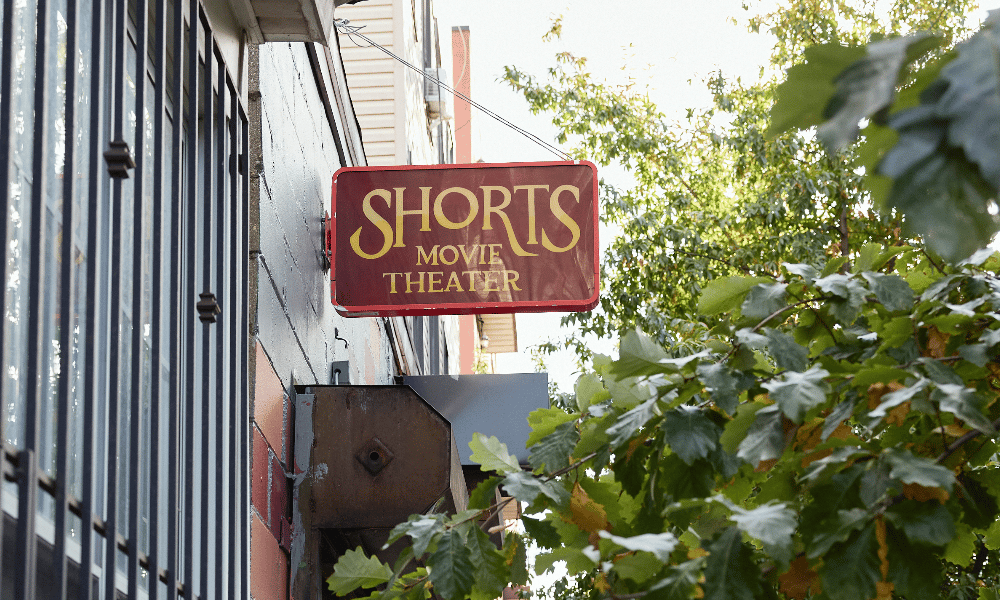
Short films have a reputation for being niche. They’re often seen as an exclusive form of art, made by filmmakers, for filmmakers. This stereotype is largely due to the lack of opportunities and support for short films, particularly in how audiences can watch them; many short films screen at festivals, but often have no substantial afterlife, streaming platforms are few and far between, and shorts posted online can get lost in the algorithm.
One thing’s for sure, though: it’s not because there’s no appetite for them. There is an audience out there, ripe and ready to engage with short films, and we’re all part of it. We already spend hours every day watching short form content, but we do it alone, in isolation on our phones. The problem, therefore, is not lack of audience. The problem is there has never been a space for them to gather.
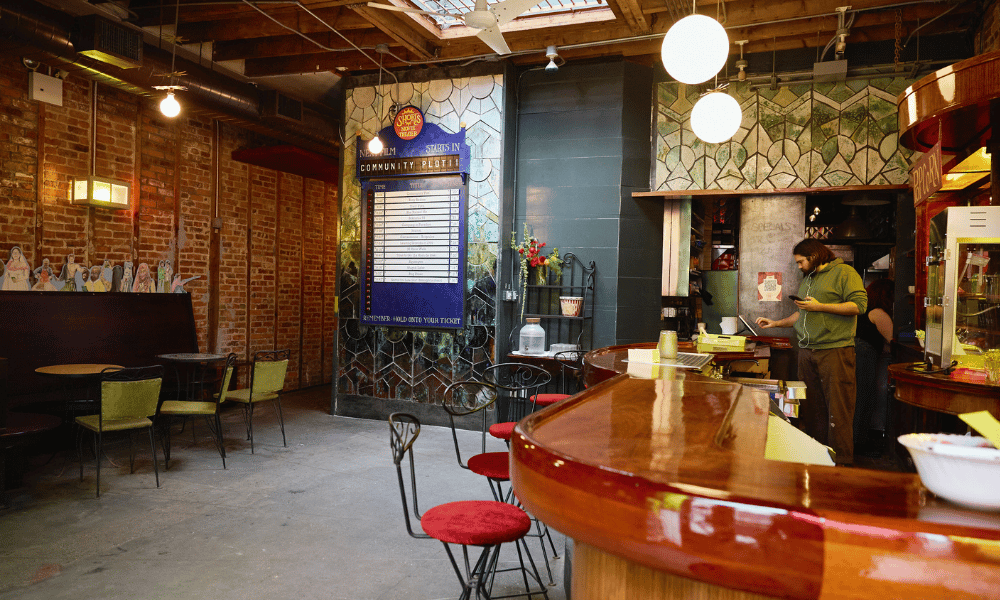
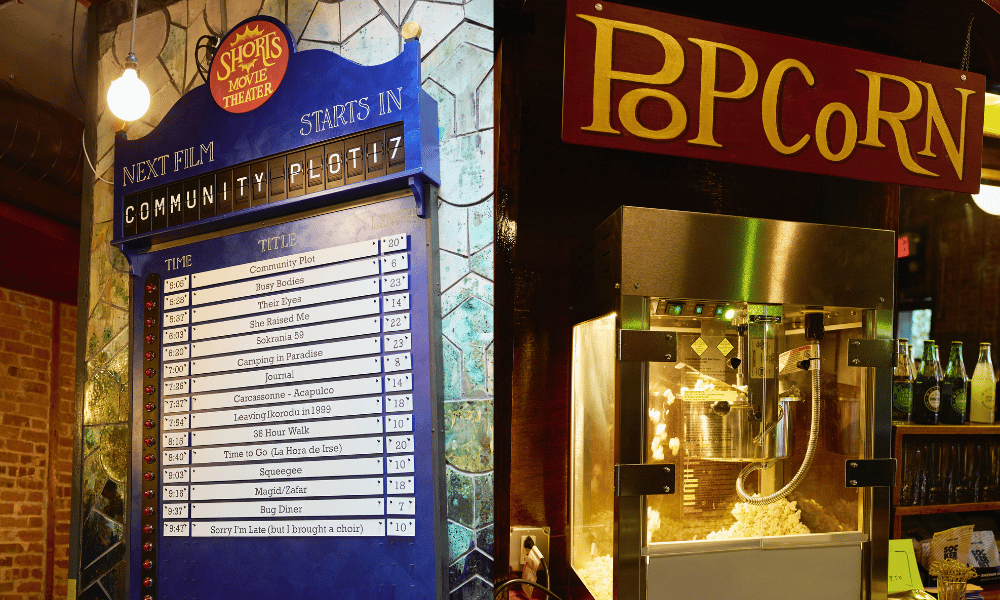
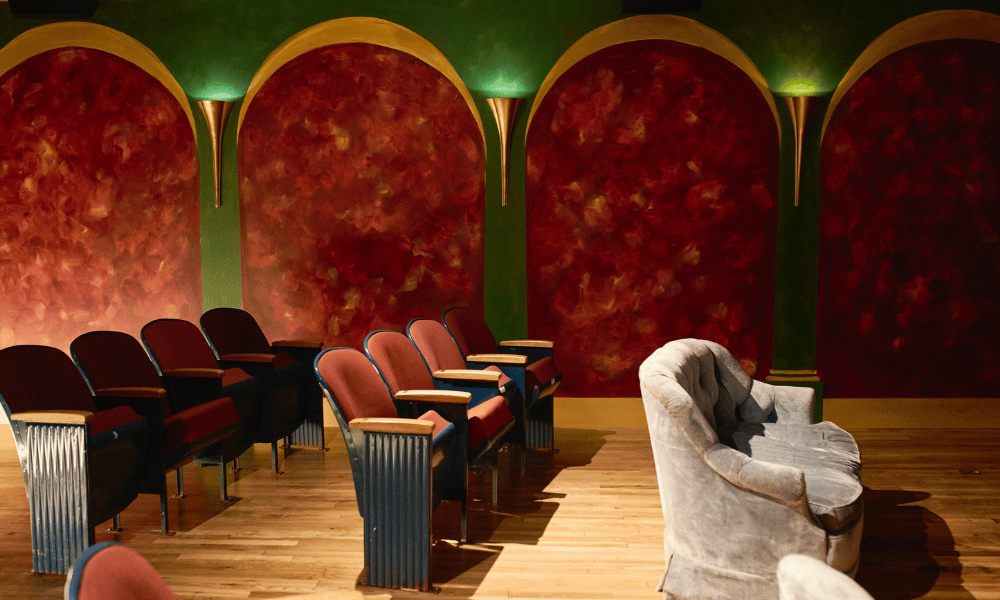
Shorts Movie Theater in Brooklyn, New York, is changing that. It’s the world’s first (!) cinema dedicated entirely to short films, and short films only. Every night from 5pm to 10pm, it plays a slate of shorts that changes week to week. It includes shorts of various lengths, genres and styles. You can walk in and out whenever you like, watch one film or ten, and pay at the end. Each film is chosen to stand on its own, so every short gets its own individual life on the big screen.
A week after opening, we caught up with Karma Masselli, founder and owner of Shorts Theater, along with the programming team, Pierre Plantevin, Manuela Romero Samaca and Cara Griffin. We talked about all things short films, the power of an audience, and the movement and mentality behind Shorts.
Short Stuff: Where did the idea for Shorts Theater come from? Was there a specific moment
Karma Masselli: [Cara & I] were at Middlebury Film Festival watching short films and we met this woman, Sandrine Cassidy, who works in distribution. She's the first person I think either of us really knew who worked in short films. We asked her if there's a theater for shorts and when she said no, we thought that perhaps there was a fascinating opportunity out there to change that.
SS: We watch short videos on our phones all day and consume a lot of short-form media. Why was it important for you to create a space where people can watch short films at the cinema, with a community?
KM: Short form video is the most popular form of entertainment, and yet there's not a single way that we watch it together. Beyond being the most popular, it's also the most privatised. Currently, we tend to consume short-form video on platforms owned by Meta or Google, which are some of the most evil companies in the world. They’ve generated in us a viewing habit that is based around meeting our need for constant distraction. Shorts Theater looks like a movie theatre, but what we're really doing here is creating a source of competition for the other forms of distraction on demand that we have. Something that connects people to independent media and to each other. Our real product is giving people a different way to meet that same need.
SS: Why did you land on this model where audiences have the option to come in and out of the cinema and pay at the end?
KM: We need flexibility, and we need affordability, and that's what we get when we watch via streaming. Creating this model where people can go in and out of the theatre means they can watch whatever they want, whenever they want, and they can pay at the end, which separates that moment of choice from the moment of payment in a way that matches how we watch online.
SS: It’s really important to have a space where people can see short films outside of a film festival or online. Can you talk me through the process of building a slate, and how it’s different to film festivals?
Cara Griffin: It's not programmed or organised in a way where an audience member watches all the films starting at 5pm through to 10pm. When we're thinking about ordering, or what will play in the same slate, we’re thinking more about what we don’t already have in the line up. We need diversity so that, with anyone who comes in, there’s an opportunity to either surprise them with something they wouldn't have expected to be there, or have it end up being the exact thing they love. Most of our customers are excited by the variety of things they've been seeing.
Karma: We define our customer as somebody who's walking home from the grocery store, and they're like, "Should we catch the next one?" And so they might just see one.
SS: I love that. It means you can accurately judge the film as an individual form of media instead of comparing it to what you’ve been before or after, because our brains will do that anyway. What is your process as a team of choosing which films to programme? Are there certain shorts that you're drawn to?
Manuela Romero Samacá: I usually ask myself, am I willing to make someone pay money to watch this film? How much does it stand by itself as something that I feel the intense need to share with other people and to tell them that it is worth their money and their time? As a filmmaker, you’re so used to understanding shorts as being part of a block and being in conversation with what everyone else is making, and constantly thinking about the time: is it going to fit in the programming? And for this we have to think about it as a standalone piece of entertainment and whether it’s worthwhile to our audience.
Pierre Plantevin: That's pretty much how I feel about it: Is it engaging in whatever way it's trying to keep my attention? That's the main criteria, which is obviously a little bit instinctive. We don't stick to any specific genres or eras or places. I try to be broad and bring as much variety as possible. All of us have, to varying degrees, worked on short films and know how exhausting and tiring and thankless it can be. For me, I feel like it's about giving something back to the filmmakers, if we’re able to make each film feel like it's special.
CG: In our team of programmers, I feel like we all have different tastes of what we would watch on our own for fun, and I think that’s really cool because we'll like different genres when we're recruiting films. If it was just one of us programming, it would be so different. We want any customer to come in and have the ability to enjoy each short in some way, whether it be that they think it's super weird or they think it's super awesome.
SS: And how do you find the films that you screen?
PP: I watch a lot online and I'll often look up random short film listicles that people make, like a ‘Best of 2020’. As we've progressed, we have started to form more relationships with distributors. But then, we also go to film festivals, either in New York or, a big one we went to last year was Clermont-Ferrand, so it'll be a variety of festivals, streaming distributors, and then…
CG: The occasional rogue, dirty Bushwick basement screening.
KM: Those are great for finding some of the more low budget movies that are still really strong in storytelling! You can't find those at film festivals because they don't get programmed because something is wrong with the sound or the colour is not great, stuff that, in my opinion, doesn't matter that much to our audience if it's really entertaining.
MRS: It feels similar to when I'm doing casting [Manuela is also a casting director – you can read our interview with her here], in that I get kind of obsessive about one specific director and their work. I definitely find a lot through scouting on the internet and just finding one filmmaker that I like. It's a lot of Instagram stalking.
CG: We don't want to just pick from festivals because we want it to be accessible, not just to people who've had the money to submit to festivals. The best is when a filmmaker or someone we meet is like, “Oh my gosh, let me send you my 10 favourite short films.” When filmmakers are able to push for other short filmmakers they love, I'm really excited to get their opinion because it means they're really engaged with short films, and it's not just about getting their film seen, but more about their love for the community.
SS: It’s so cool that you utilise your network, it must make for such a community-focused space. Allowing filmmakers to have this exposure is also so important, you give them the opportunity for the film to have a life outside the festival scene. What is your goal for Shorts Theater to do for the filmmakers whose work you screen?
MRS: In the best case scenario for the filmmakers, you're building an audience and you're learning. I think that something that I have felt with my own films is that there is a missing link in the filmmaking process. You learn something in pre-production. You learn something while you're in production. You learn something in post-production. That is advancing your form and how you tell stories to other people. But I think that we are so disconnected from the last bit, from how the back and forth works with an audience. And so, I think that in the most ideal scenario, we are helping filmmakers build an audience and understand why they're coming to see the things you're making. And, you are getting the full filmmaking experience or the full artist experience of seeing how your work is experienced in the world, and how is that going to inform the next thing you make, so that you can be more in touch with either what you want to make or what you want to say or the people that you want to connect with.
KM: For the filmmakers in this neighbourhood, Shorts Theater is an opportunity to get to see a bunch of really great shorts that have the potential to inspire them. I mean, we hope that will happen.
CG: Filmmakers need to watch each other's short films.
KM: Right. I feel what’s most important for filmmakers is encouraging them to get inspired by the audience and by the experience of what it feels like to be in a group of twenty-five people who are watching a film and are free to totally focus on just that movie. From me and Manuela's directing training, our teacher [at NYU], Fritz Ertl taught us that you can do absolutely anything you want as a director, except not care about your audience.
SS: Do you often get submissions, and do you have a way for filmmakers to submit their work to you?
CG: We actively didn't want to be on Film Freeway [the main submissions platform for film festivals and competitions] and have people pay to submit, so we just opened up a community slot at the top of each day. There's an opportunity for a local filmmaker to screen their film as the first film of the day. It’s free for them, and it’s free for audience members. That’s awesome for them and good for us because then a filmmaker can bring their people who now could get to know the place, stay a while, hang out, and then that might inform their future projects. They can start thinking, “Okay, now I’m seeing how people are reacting to this,” but they don't have to go through an unnecessarily long submission process or spend a lot of money.
SS: Why was Brooklyn the perfect place for Shorts?
KM: I think Shorts Theater could succeed anywhere because our audience are people who watch short form videos rather than people who watch short films, and those people are everywhere. In Brooklyn, we have all these filmmakers, and so we have a chance to think about our audience as concentric circles. At the very centre are the filmmakers. Those are the people most likely to show up. Then we have the people who are looking for something fun to do with their friends, and they could be at trivia night, but instead they're here. And then you have tourists and people who are just looking for a one-off fun thing to do, and we become a cultural institution enough that we're on their radar.
SS: Why is the audience so important to you?
KM: A movie is something that facilitates a relationship between an artist and an audience. I think that the situation we have right now in our industry is that we're set up to really value a powerful person watching our movie. What we want to offer with Shorts Theater is an opportunity that incentivises a filmmaker who cares about a totally powerless audience. Creating opportunities for filmmakers is awesome, but I think the very unique thing we bring is creating focus and attention around audiences.
SS: You’ve been open now for a week [at the time of this interview]. How has it been? What has your audience been like since you opened?
KM: It's a lot of neighbours and people in the area, which is very sweet. It's not a lot of filmmakers. It's people who seem like what they're doing is filling their time, rather than seeking out a short film. In terms of our mission of converting people into short film audiences, it feels like we're actually getting to do that. It's been very special to see people return and come back with a friend, and then explain to their friend how it works.
SS: Is there an audience reaction or something someone’s said that’s really stuck with you so far?
PP: It's just been nice to be here and hear people laughing inside, or as they walk away, saying, “I really enjoyed that”. Seeing people enjoying a movie they weren't expecting to enjoy. I think the general feeling is that people are like, “Oh, I guess watching short films can be enjoyable.”
KM: One special audience moment was when we had these two guys come in, they watched the first couple movies of the day and then hung out in the lobby for an hour. They were getting ready to leave, and then they saw that the countdown was saying the next film was starting in two minutes, and they looked at the programme and they said, “It's only eight minutes. Should we watch it?” And then the other one goes, “Why not?” The ability to facilitate a relationship with independent media where it's so easy and accessible, removing all the factors that get in the way of a theatre experience, and just hearing them say, "Why not?" I was like, that’s the crux.
“Why not?” sums up everything Shorts Theater stands for. Why not this film? Why not this place? Why not a cinema built entirely for short films? In the month since they opened, Shorts Theater has filled its seats with neighbours, passers-by and returning customers bringing friends.
For Musseli and her team, that spirit goes beyond the cinema itself. “It’s our job to say what would work for us, what would be good for people to do and to have,” she says. “The spirit of thinking, why not try to come up with a better way for this to work, has been the inspiration around each element of this.”
So, next time you find yourself in Brooklyn with a spare eight minutes, why not treat yourself to a film at Shorts Theater?