
Berenika Balcer selects her top five shorts from this year’s debuts-only Młodzi i Film Festival
25 September 2026 | By Berenika Balcer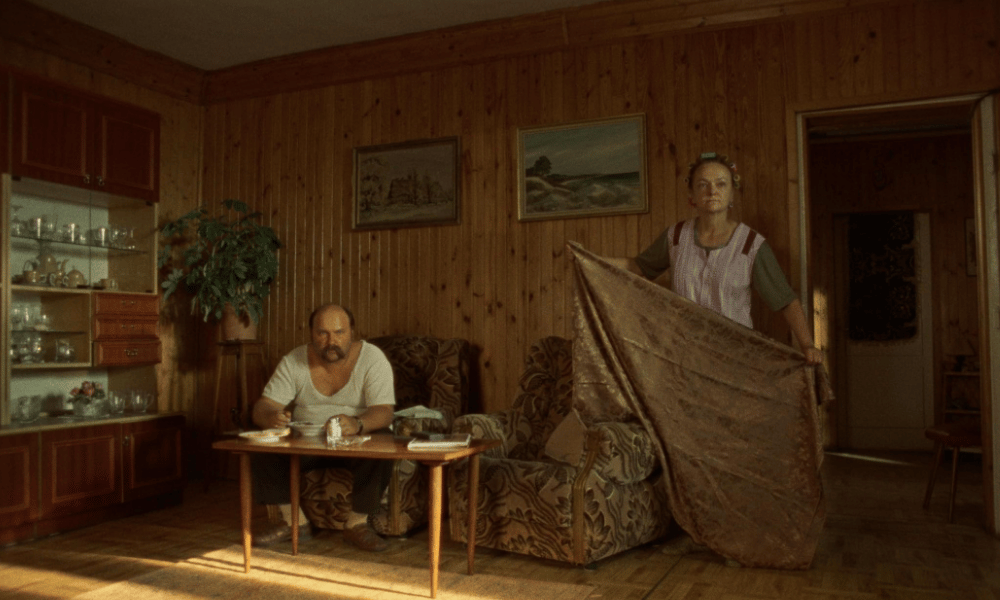
Still from Spiritus Sanctus by Michał Toczek
What happens when routine fractures? These Polish short film debuts, shown at the Młodzi i Film Festival, take a close look at the extraordinary hiding inside the ordinary. None of them abandons realism entirely; instead, each stretches it just enough for hidden emotions to surface.
The Koszalin Film Debuts Festival “Młodzi i Film” (literal translation: Young and Film) is the oldest in Poland dedicated exclusively to debut cinema and remains one of the country's most vital platforms for emerging Polish filmmakers. Unlike festivals that focus on premieres or international auteurs, Młodzi i Film offers perhaps the clearest annual snapshot of where Polish cinema is heading, bringing together feature, documentary, and short debuts in one programme. Over the decades, it has become a crucial meeting point for young directors, producers, critics and industry professionals.
The 45th edition, held in June this year, continued that mission while expanding the festival to seven days. The programme featured three competitive sections for feature, documentary and short debuts, alongside industry events, masterclasses, concerts and special screenings. This year's edition reflected the remarkable vitality of contemporary Polish cinema, presenting works that ranged from intimate psychological dramas and formally adventurous shorts to ambitious feature debuts.
Thirty-two shorts were selected from a total of around 200 submissions. Among the award-winners were A Short Film About War by Nadim Suleiman, a brave new voice in Polish cinema; Katarzyna Kosajda’s Przeciągi, a bittersweet portrait of a woman and an unfulfilled love; Karolina Chabier’s mesmerising animation Kosmogonia; and Kontrewers, an experimental, boundary-pushing documentary by Zuza Banasińska.
The shorts I've chosen to discuss here, however, look at the moments just before life changes. People in them are, in one way or another, stuck, their stories beginning when they are forced to move. Yet none of these films is driven by larger external goals. Minor moments accumulate until they become the story itself. At the same time, they share a very Polish quality – a fascination with the absurd dignity of ordinary existence.
Into the open | Wiraź by Piotr Szuba
In Wiraź (‘The Dogleg’), Piotr Szuba taps into a truly grim yet engrossing version of a Western. In a Polish village in the early 2000s, Mikołaj (Adam Wietrzyński) is back home from Germany. His younger brother, Dawid (Hubert Czajka), is battling with the question of what he wants to do after he graduates from high school. Right now, however, he’s more fascinated with level-headed, hardworking Weronika (Oliwia Durczak). The summer in the village is filled with waiting for final exam results, watching the FIFA World Cup, hanging out in a local bar, and, above all, riding motocross bikes.
Their carefree routine is disrupted when Jabłoński (Krzysztof Jasiński), a man who left the village years earlier and whose reputation has become almost mythical among the locals, suddenly returns. His arrival progressively fractures the group's sense of security, culminating in a confrontation that ends in tragedy.
What begins as a nostalgic portrait transforms into something darker, charting the moment when youthful invincibility gives way to irreversible consequences. The title itself gives it away: in Polish, "wiraż" refers to a bend or curve in a road or racetrack, a term associated with motorsport, but also one that carries an obvious metaphorical resonance, implying a decisive turn in the characters' lives.
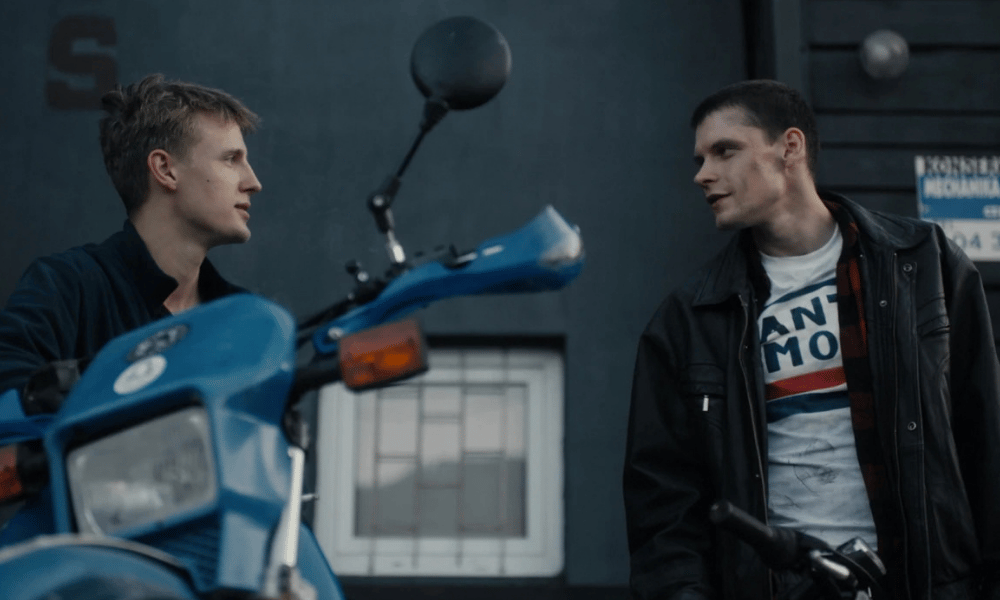
Still from Wiraż by Piotr Szuba
The everyday turns strange | Złe pomysły by Jan Bujnowski
Although Jan Bujnowski’s Złe pomysły (‘Bad Ideas’) is listed as a comedy, it’s more of a deadpan escalation built on minimalist humour. “What connects sunglasses, high school friends, diminutive names, and sombrero hats?” reads the logline. That’s pretty much all there is to the film – and that's all it needs. Złe pomysły shows how insignificant details accumulate into something unexpectedly meaningful, or spectacularly meaningless.
Rather than relying on slapstick, the film embraces a dry, observational absurdism where the humour emerges from treating ridiculous premises with complete seriousness, which is in keeping with Bujnowski’s well-established style. He doesn't seem primarily interested in social diagnosis or psychological breakdown. Instead, his films linger in the uncertain space where everyday life starts to feel just a little off-kilter, allowing small incidents, conversations and coincidences to accumulate into something unexpectedly revealing. Here, even a girl hitting her head onto a piano doesn’t seem out of place.
Despite its deceptively modest premise, Bad Ideas is far from visually restrained. The film places much emphasis on atmosphere and image, culminating in a striking psychedelic sequence. The increasingly expressive cinematography mirrors this process, culminating in a psychedelic finale that privileges sensation over explanation. Rather than functioning as a conventional punchline, the visual crescendo appears to reframe everything that came before, turning it all into something even more dreamlike and experiential.
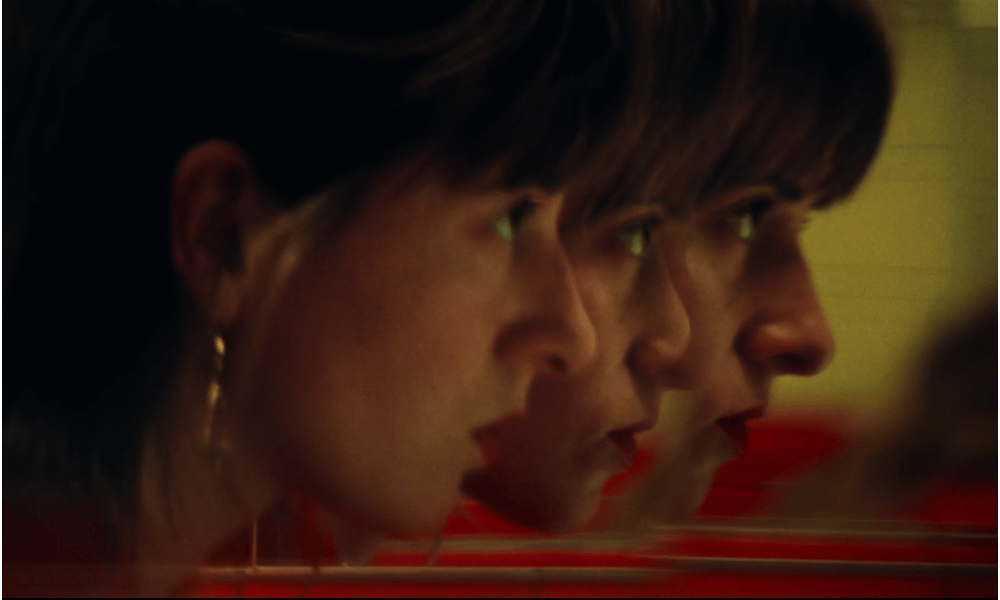
Still from Złe pomysły by Jan Bujanowski
Inner landscapes | Bebechy by Anja Zalewska
If Złe pomysły finds strangeness in coincidence, Bebechy (‘Guts’) makes inner turmoil physically visible. Anja Zalewska’s short sits between drama and surreal allegory of all-consuming disorder. To save her relationship, a young woman (Maria Kłusek) struggling with an eating disorder must stop feeding her insatiable washing machine with clothes and venture deep into her own denial. As fever-dream-like as it may sound, the washing machine is, of course, the externalisation of the protagonist's illness, a fantastical device through which an internal psychological conflict becomes visible.
Rather than focusing on the physical symptoms, the film is interested in the elaborate systems of concealment that often accompany disordered eating. The woman’s greatest obstacle is not simply admitting the illness to others, but confronting the narratives she tells herself. The shame she feels for lying to her partner (Marcin Nowicki) makes the washing machine angrier and angrier. Although saving the relationship provides the narrative catalyst, the real conflict is still internal; recovery requires vulnerability rather than performance.
As the machine literally consumes identity through clothing, the film becomes visually striking. The colourful interiors and practical effects mixed with animation make it all even more fantasy-like. Bebechy uses a tendency more broadly used in contemporary arthouse cinema to externalise psychological states through tangible, often uncanny forms, allowing the physical world to become an extension of the protagonist's inner life.
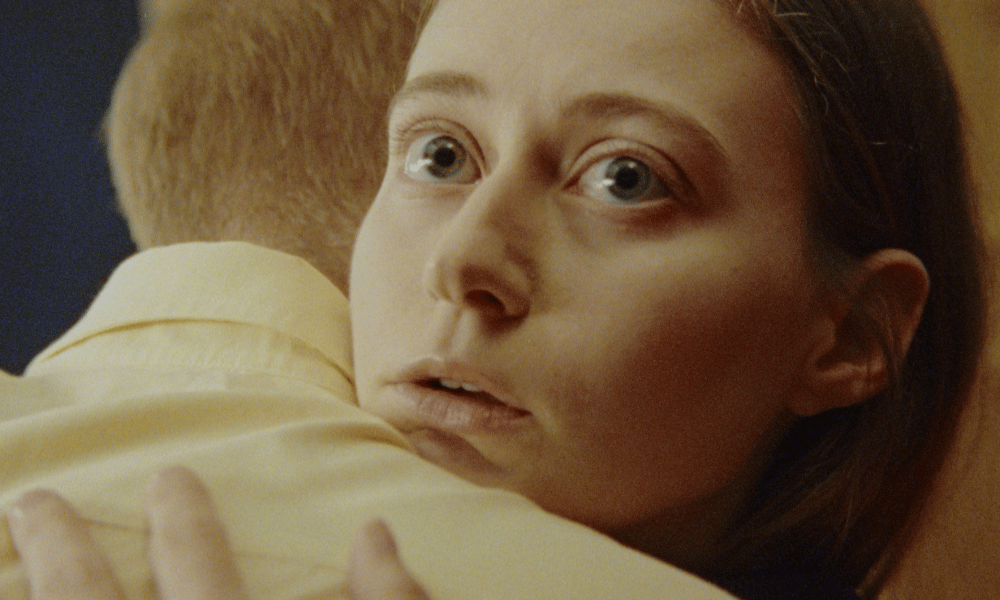
Still from Bebechy by Anja Zalewska | Courtesy of Zofia Połaniewicz
Finding peace in concrete | Jogurt by Aleksandra Góralewska
Aleksandra Góralewska pushes that shift even further. In Jogurt (‘Yoghurt’), it's not just the protagonist's inner world that changes, but the entire housing estate in which she lives that seems to operate according to its own eccentric logic. Panda (Maja Szopa), meanwhile, is sure she’s living the worst possible version of her life. In her late twenties, she has dropped out of university, still lives with her neurotic mother (Anna Ułas) and tarot-reading grandmother (Tomira Kowalik), struggles to find work, and fears she will have to become a hairdresser. Determined to break her streak of misfortune, she leaves home hoping that buying a fat-free yoghurt for her mother will offer a brief escape. Should be easy, right? Except, the return of her childhood crush, Andżi (Magdalena Parda), forces her to confront feelings of inadequacy, while the seemingly monotonous post-communist estate reveals itself as a place full of strange characters, visual jokes and unexpected possibilities.
Instead of being centred on trauma, Góralewska’s short builds its story around familiar paralysis, the feeling of becoming stuck in adulthood before it has even properly begun. However, rather than treating Panda's trip to the grocery store as a simple coming-of-age errand, Góralewska gradually transforms it into a sprawling adventure, where each encounter reveals another layer of heightened reality hidden within an otherwise ordinary setting.
Konrad Miklaszewski’s cinematography approaches the housing estate backdrop with a hunter-like curiosity, making the visual language central, with its comic-book framing, meticulous observation, and expressive shots. As such, the film evolves into a contemporary urban fairy tale with almost mythical overtones. Later on, it shifts further away from reality as Panda encounters a group of young women living on the margins of society in a forest hideout, rejecting conventional expectations surrounding careers, therapy and beauty standards.
Filtered through a dystopian sensibility and strongly rooted in the literary world of Dorota Masłowska, Jogurt (which won the Energa Female Energy Award for its vivid and unconventional portrayal of female characters) offers social satire and contemporary Polish reality rather than straightforward realism. Ultimately – spoiler alert – it’s an optimistic urban fable, landing on hope rather than resignation, as lovely as true in its absurdity.
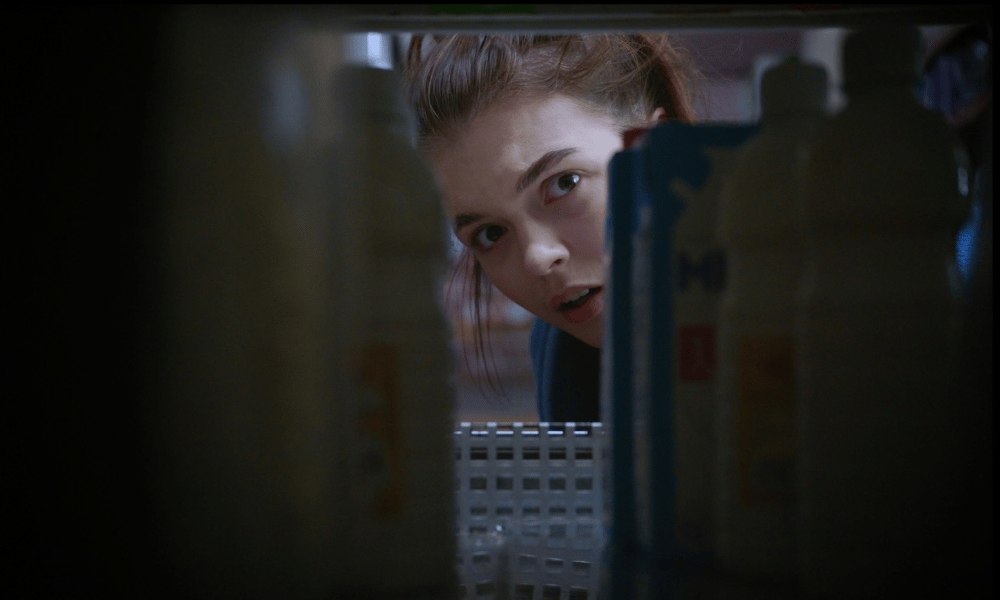
Still from Jogurt by Aleksandra Góralewska
An ordinary Polish odyssey | Spiritus Sanctus by Michał Toczek
Yet, having an existential crisis in the middle of the post-communist housing estate was not the most Polish short in the programme. The final film brings that dreamlike sensibility back into recognisable reality. In Michał Toczek’s Spiritus Sanctus, the oneiric logic emerges not from fantasy but from Polishness itself.
Just like Panda, Bogdan (Sebastian Stankiewicz) sets out on a mission. His wife (Izabela Dąbrowska) is celebrating her 50th birthday, but soon realise that they forgot to buy vodka. Unfortunately, he has chosen the worst possible day – it’s June 1999, Pope John Paul II is on pilgrimage to his homeland, so there’s a temporary prohibition on alcohol sales. As Bogdan searches for a bottle, his errand spirals into an increasingly bizarre journey filled with absurd encounters, eccentric characters, and inexplicable obstacles. The question gently shifts from whether he will find alcohol to whether his quest has become something altogether more profound: a metaphysical odyssey disguised as a mundane task.
In this tale of sacrum versus profanum, rather than satirising the Pope or religion directly, the film explores the cultural atmosphere surrounding papal pilgrimages in late-1990s Poland, when faith, state authority and everyday routines temporarily merged into a single public spectacle. Classical satire would be easy to do, though, with national mythologies and Polish meme culture surrounding John Paul II remaining strong here. Toczek himself told Vogue Polska that he was inspired by Czech cinema and Ken Loach's social realism, aiming to tell universal stories rooted in specifically Polish cultural codes. Rather than mocking his characters, he wanted viewers to sympathise with them.
Stankiewicz’s performance is the emotional anchor of the film, bringing sincerity and vulnerability to Bogdan's increasingly surreal quest. The film’s dreamlike progression highlights its subtle exploration of broader questions about Polish identity, belief, and everyday life. But foremost, it’s absolutely hilarious, without descending into caricature.
Like the other films discussed here, Spiritus Sanctus begins with an ordinary errand and ends somewhere far more profound, and, like the rest, it discovers life's invisible thresholds in the most unassuming corners of everyday existence.
Still from Spiritus Sanctus by Michał Toczek