
how we get free: Mad liberation in film
WHite walls, a short film about the horrors of the psychiatric system
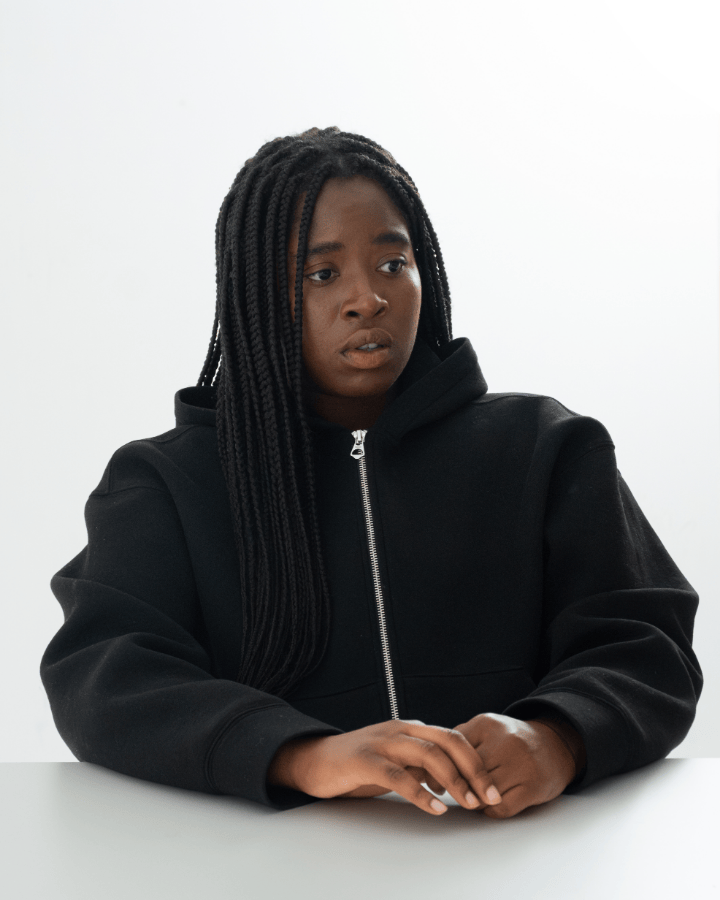
Aiyana Goodfellow is the writer, producer and director of White Walls. The film itself is only a small part of a much more extensive project that explores psychiatry, racial capitalism and healing.
It is a huge project so we’re sharing just a snippet of the materials that exist. We encourage you to take some time to engage with the below with an open mind and heart. You can view the full digital zine, artwork and filmmaking process here.
1 Dec 2025
Molly Lipson | Aiyana Goodfellow
Healing Justice Ldn (HJL) is an organisation that helps build towards a world with abundant and accessible community health and healing. Without them, the injuries of racial capitalism, oppression, and generational trauma will fester, keeping us chronically fractured, unwell, and under-resourced.
In Practice is a creative container within HJL to support explorations of the world we have and its impact on us, and to imagine the world we want to build and live in. Every six months, HJL engages a new Editorial Steward to lead In Practice by developing, commissioning, and executing creative projects. Aiyana Goodfellow was HJL’s Editorial Steward from May-October 2025. They are a multi-disciplinary artist whose work spans writing, music, theatre, and filmmaking, and a community organiser.
Aiyana decided to make a short film that explores the horrors of the psychiatric system. For some, this may feel strange to read. Our general understanding is that the psychiatric system exists to support and care for people with mental illness, especially those in crisis. However, for many people who come into contact with the system, in particular those who are already racialised and marginalised, their time in psychiatric spaces can be harmful, violent, carceral, traumatic and can worsen their overall mental state.
There is much to explore on this topic. If you’re interested to understand this better, here are a few resources to get you started:
In the meantime, we’re sharing some insights from Aiyana’s process of making White Walls. They have carefully documented the creation of White Walls, both as a short film and as a wider project – you can read the full digital zine here.
Below, we’re sharing some excerpts from the zine along with fragments of a conversation that took place with various members of the film’s crew at a Q&A hosted by our Managing Editor, Molly Lipson.

Aiyana: “My overarching goal during this stewardship was to explore the lived experiences of neurodivergent, mentally ill, disabled, and mad people within the mental health industrial complex through the creation of a fiction, horror-genre short film. Marginalised communities have long had our stories and histories silenced, destroyed, denied and delegitimised. Yet amidst this cultural violence, people have resisted by creating underground, unfunded films and writing scripts that push boundaries, refusing to allow capitalism to rob us of an art form we deserve to take part in.
The camera in and of itself is a site of reclamation and power. It is the surveillance in our streets: a weapon of the state. It is the documentation of our deaths: a weapon of the people. Our access to life beyond our own is often through the camera. This is how we are able to so accurately and acutely understand the worldviews of marginalised peoples we might never have connected with.
The horror genre offers us an opportunity to explore such margins. Vampiric lore is often connected to queer experiences: those who are ‘othered’ due to their insatiable and innate desire. Werewolves are creatures who transform with nature’s lunar cycles, quite literally shedding their skin and releasing an inner self in a way that could be allegory to the trans experience. And throughout the genre, the demonisation of mental illness (alongside madness, neurodivergence, and disability) as inherently terrifying or violent.
This project hopes to subvert this by identifying society, and particularly the mental health industrial complex, as a site of horror.
Images: Amelia Rose Nell
Horror and healing may seem paradoxical at the surface, but often are deeply intertwined. Experiences of horror are often an invitation towards healing, supporting us to reclaim fear and discomfort from systems of oppression and enable us to be emotionally resilient as we long for a better world.
Building capacity for societal healing – including healing justice – means developing an understanding of our relationship to horror: our encounters with it, our reactions to it.”
Below are some extracts from the digital zine that explain the creative research and how Aiyana and the writers approached the writers’ room.
To wrap up the project, Aiyana invited three artists to make creative reflections on White Walls, engaging with the themes, characters, and narratives present in the film.
Here is one of those pieces, Institutionalised Poetry by Evie Muir.
Evie Muir (she/they) is a Black, queer, disabled and working class nature writer and founder of Peaks of Colour - a Sheffield and Peak District-based nature-for-healing community group, by and for people of colour.
As a survivor of gendered violence, Evie is interested in the ways writing can forge a landscape of healing and justice outside of carceral feminist models. Their work seeks to further the Black Feminist legacy of writing new worlds into being, in service of collective liberation for the human and more-than-human.
Evie's debut book, 'Radical Rest: Notes on Burnout, Healing and Hopeful Futures' explores Black Feminist and Abolitionist approaches to activist burnout, and was published by Elliot & Thompson in 2024.
Institutionalised Poetry is a series of pieces that respond to the questions asked of the protagonist with White Walls. Distorted example pages from PIP forms foreshadow the pieces, prompting the words to disrupt institutionalised models of so-called "health care". Incorporating, both digital and hand written text, each response was curated by experimenting with the ways somatic practices create space for the body to answer in ways that bureaucracy can't - allowing Evie to honour their humanity while tending to a part of their past that still haunts them.
Hita Asodia (she/her) is an emerging Visual Artist and she recently graduated from the University of Arts London with a BA (Hons) in Character Animation. Hita explores themes of identity, belonging and navigating systems of oppression using the animated format as a basis of artistic thought. Through her work, she hopes to promote radical imagination, investigation and critical thought.
Living in a Box is an animated short film that explores abstraction of the self through shapes, textures, movement and sound. This piece hopes to contemplate and give form to the unseen world of the overwhelmed/oppressed and to sit with the discomfort of internal reflection.
Quotes from the film crew at the Q&A panel following the premiere screening of White Walls on 9 October 2025
“So much of the time when mental ill health is represented in film, it becomes the site of horror. With this, we wanted to try and flip that, to explore the system as the site of horror.”
“‘Comms’ initially came from colonisers: ‘Now we’ve conquered the land, the next step is for us to conquer the mindsets, the psyches of the people.’ We’re really trying to explore how can comms come from the colonised and so how can it really be decolonial. We’re very aware of the oppressive media environment that this film is being released into. We try to be strategic and creative about the ways that we get this to where we want it to go. We hope it reaches the people that will connect to it.”
“When you grow up in a impoverished community, you don’t have good infrastructure. Walls are thin, you’re constantly hearing what everyone around you is doing. There’s that constant interruption of your peace and wellbeing. You’re hearing sirens because you’re part of an over-policed community. The sound design of our communities, of our world, is really intentional.”
“There’s the scene where the protagonist is basically saying, I’m doing everything you’ve asked me to do, I’m trying to fit into all the boxes that you have given me and yet that’s still not really allowing me to break free from all of this. With the ancestor character, the messenger, we wanted to show how the parts of us that are pathologised and deemed as either criminal or madness are the parts of us that ultimately liberate us as well. After a point you can hear the voices getting louder and louder, because our protagonist is holding on to the parts of us, the parts of herself, that are trying to be shut down by this institution.”
“I think sound also has a lot of healing potential – I do sound baths and guided meditations, for example. And there are people’s voices and vibrations of instruments that can immediately kind of calm you down, and vice versa. ”
WHITE WALLS
PRESENTED BY HEALING JUSTICE LONDON
A film by Aiyana Goodfellow
TOBI - Tumba Katanda
THE PROFESSIONAL - Sé Carr
THE MESSENGER - Cassandra Hercules
Produced by Healing Justice London & Aiyana Goodfellow
Written & Directed by Aiyana Goodfellow
Story by: Aiyana Goodfellow, Day Eve Komet, Jordaine Kehinde, Nabeela Talib, & Zish
Cinematographer: GOKE
Production Designer: Tasnim Mahdy
Sound Supervisors: Amias Hanley & Rowan Allen
Sound Recordist: Amias Hanley
Sound Designer: Freya Shi
Hair & Make Up Artist: Hannah Shaikh
Editor: Beth Wood
Colour Grader: Hollie Garven
Zinemaker: Niharika Pore
Special Thanks To:
Amelia Wornell
Alina Smart
Alex Augustin
Camelia Muldermans
Dr. China Mills
Cici Goodfellow
Evie Muir
Farzana Khan
Feed The Village
Hita Asodia
London LGBTQ+ Community Centre
Molly Lipson
Dr. Nancy Nyutsem Breeton
Nishma Jethwa
Khatija Seedat
Julius Nasol
Sarah-Joynt Bowe
Sohpie Hoyle
Soif Studios
Dr. Stephanie Davis
Dr. Tarek Younis
What the Pitta
Zish
& The Healing Justice Ldn Ecosystem