
The Storytelling of stromae
pt. IIII:
Raf Reyntjens, director of Papaoutai
In this series we’re exploring the music videos of Belgian music artist Stromae through conversations with some of his brilliant collaborators. At Short Stuff, we are constantly expanding and experimenting with the parameters of what short film is. Stromae’s videos are heavy on narrative storytelling and visionary filmmaking – to us, they’re forms of short film. We’re so excited to share insights from those who have helped him create these works, including various directors like Raf Reyntjens.
17 Dec 2025
Molly Lipson
Raf Reyntjens is a Belgian writer and director, with an extensive background in narrative shorts, music videos and feature films. He directed Stromae’s video for Papaoutai and here, he shares his process of creating the perfect set design, the inspiration behind the idea and his collaboration with the artist himself.
Short Stuff: The set is very stylised with a brightly coloured grade that gives it a sense of being unrealistic - what was the reasoning behind that choice and how did you go about creating it? Did the set influence your approach to directing this and if so, how?
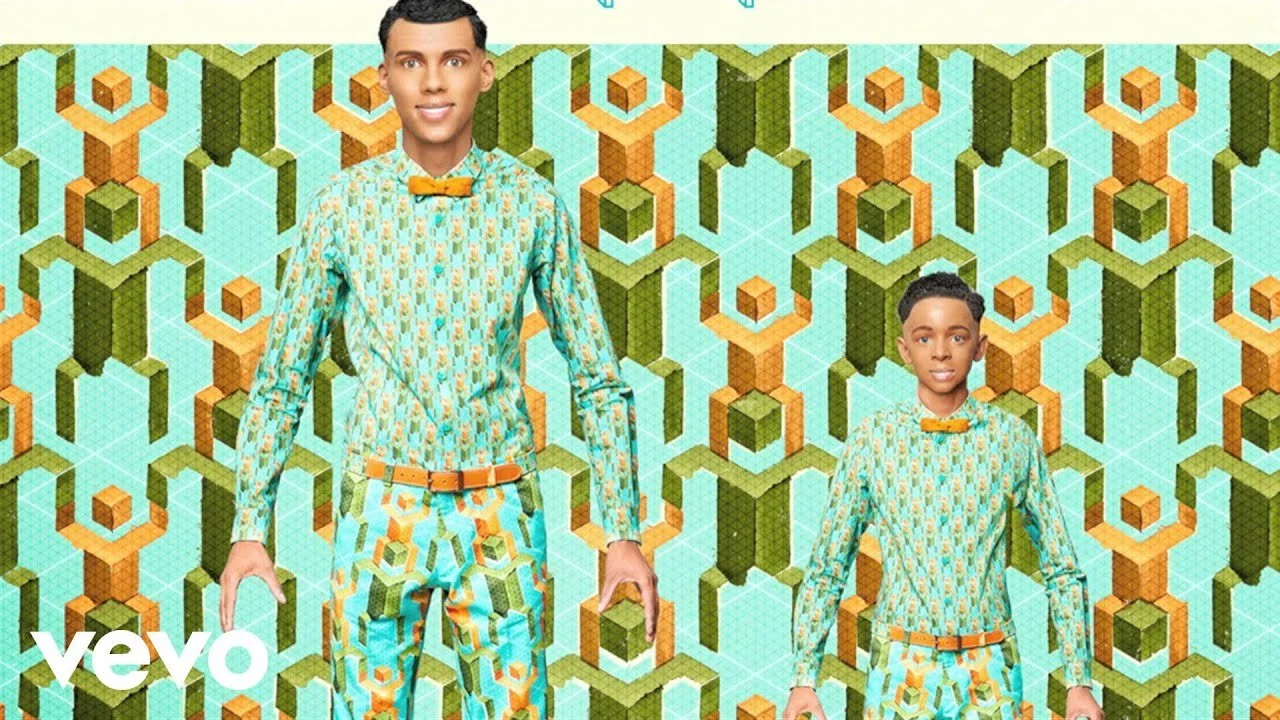
Raf Reyntjens: Our first idea was to shoot in an exterior location. We needed a fake looking suburbia world that would fit the concept. As we didn’t find the right location, I made the blunt decision to shoot in a studio. Basically like Lars Von Trier did with Dogville but more colourful. It needed some convincing but finally everyone agreed. We had a crazy good Production Designer, Yves Verstraete, who built the sets from scratch with cheap materials and old furniture he could find in his stock. He gave us way more than we hoped for. Only after the shoot he told us he was inspired by a neighbourhood nearby that was set to be destroyed. I went there and it was amazing. If we’d found that place earlier, we probably would never have shot it in a studio.
The set build took 4 days. As we didn’t have much time, our DOP Rik Zang lit the set while they were building. Since the studio was quite small we chose to mess with the perspective of the sets to create the illusion it was big enough to live in. The cul-de-sac served as our perfect dancefloor.
SS: The video is choreography heavy and the choreography is very powerful - what story did you want to tell with featuring the choreo so prominently and how did you collaborate with the choreographer on this?
RR: We worked with famous choreographer Marion Motin. The dancers were already booked before I started working on the screenplay, world class dancers each excelling in their own particular style. And then we had to match talented local kid dancers with them. Even then we had to look to Paris and beyond to find them. Once we had them on set, it all went so smoothly. All those dancers immediately got what it was we wanted to do.
The biggest challenge was to structure the screenplay to leave enough room for the dancing, while keeping the storytelling intact. So Marion focused on short pieces of choreography, each telling their own piece of the puzzle. Our editor Helena Overlaet Michiels did an amazing job finding the right balance between dance and story.
Each of the dance couples features a parent-child relationship at different stages, all witnessed by our Hero Boy with his inactive, Absent Father. Our boy was amazingly performed by Karl Ruben Noel, who we found not long before the shoot. I only saw him once during a casting online and I was blown away by his ability to convey his emotions through dance.
SS: Can you share anything from your initial discussions with Stromae about the video, and how did you continue to collaborate throughout making the project?
RR: The initial idea came from Coralie Barbier who was also one of the stylists on the project, together with Britt Ange. The story was there but we didn’t really have a shooting script. I spent the first three weeks going back and forth with Paul Van Haver [Stromae] to finish the script. However, even on set Stromae came up with a lot of fresh, additional ideas. We only had a budget for two shoot days, which is not a lot. We believed in the power of this story and wanted to get as much out of the production as possible so we made sure to decide everything upfront. Almost every shot was used in the edit.