EXCLUSIVE SHORT STUFF PREMIERE: Watch Trevor McMahan’s short ‘Escape’, an intimate story shot entirely on an LED volume stage
By Natalia Albin Legorreta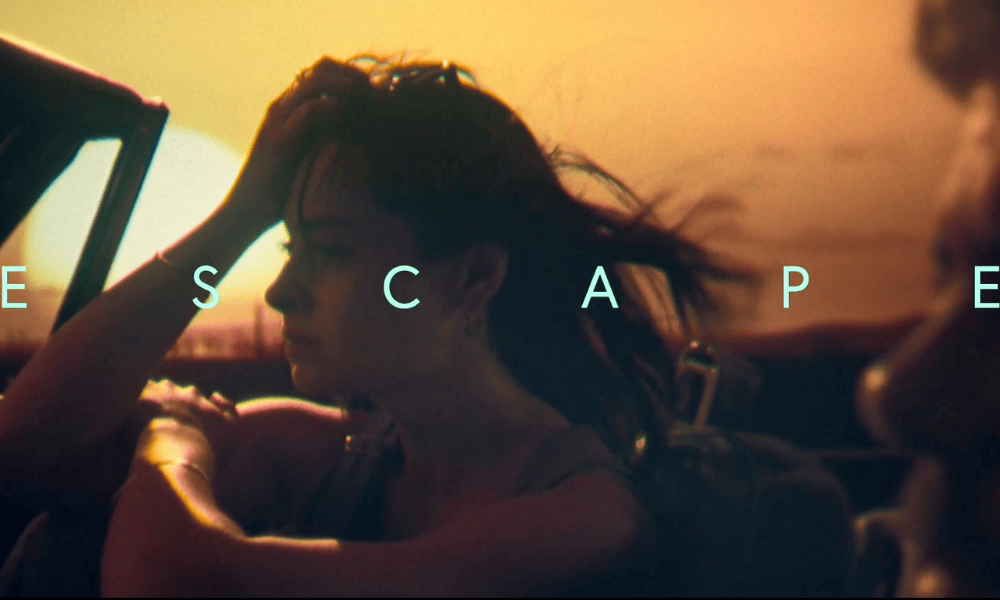
Award-winning director Trevor McMahan releases Escape, a short film about the exhaustion of digital life and the fantasy of starting over. Shot on an LED volume stage, Escape follows a woman whose daydreams about abandoning her life spiral into increasingly surreal, world-shifting scenarios.
"Lately I feel like I've been swallowed up by the abyss of the internet and all the algorithms,” McMahan tells Short Stuff on his personal inspiration behind the film. “More and more I find myself wanting to just close the laptop, turn off the phone, and escape for a while."
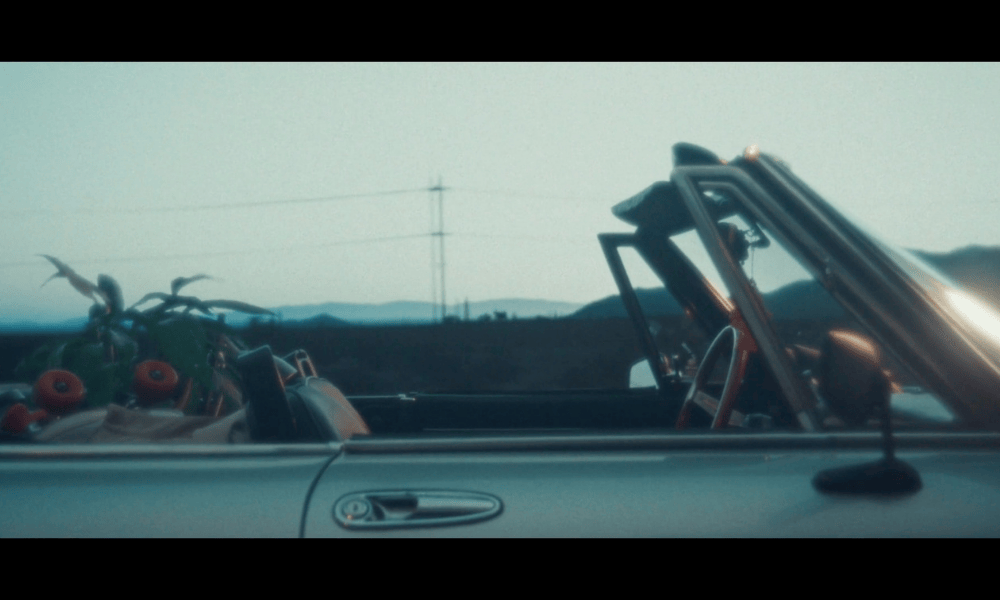
McMahan comes from an advertising background, having worked with the likes of Jeep, Visa and Google, and winning multiple Cannes Gold Lions along the way. With Escape, he wanted to apply a technology he knows works at commercial scale to something more intimate and human-led. "Commercials can tend toward being overly polished and a bit inauthentic, so I'm always trying to push things back toward believability and humanity," he says. "That mindset definitely carried over into shooting Escape. The LED technology itself is flashy and impressive, but my instinct was to push it toward something more grounded."
The film began life as a volume wall test at the Geneva LED Studio, where McMahan was invited to direct a demo. Armed with a large screen, a car and an team of environment-builders using Unreal Engine (a real-time 3D creation tool), a road trip felt like the natural story. “From there it became a fun creative challenge: how far could we take these characters on their journey without ever leaving the studio? That tension between physical escape and digital illusion ended up becoming the core of the film.”
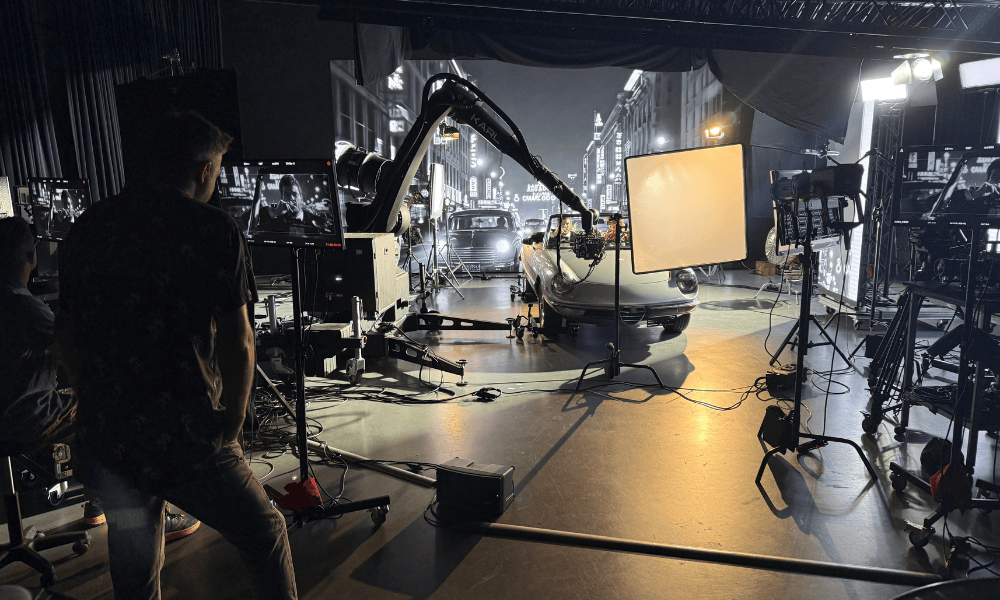
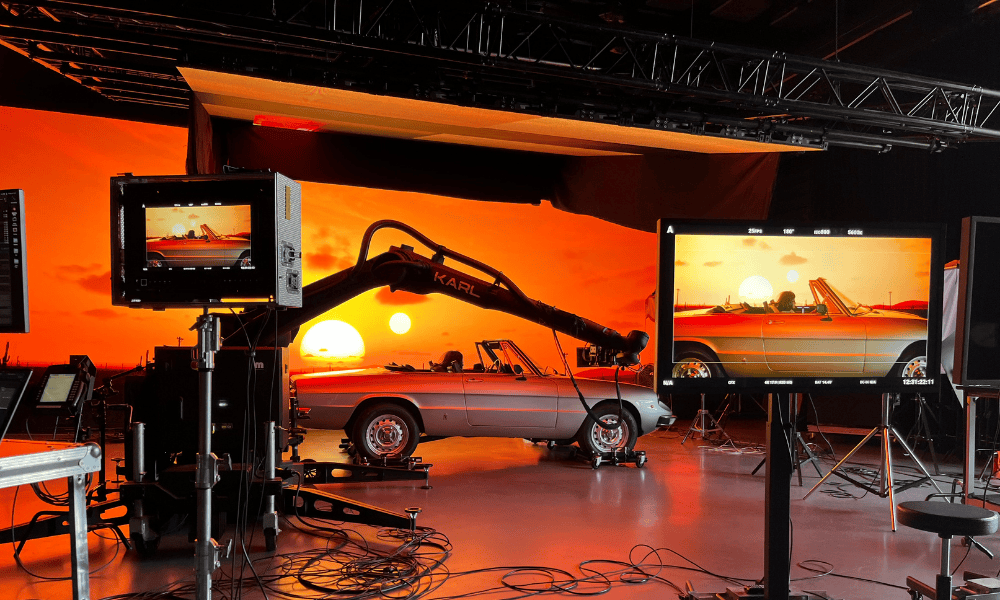
Each environment was constructed differently: 2D driving plates captured by nine simultaneous cameras provided the city and bridge sequences, casting real reflections across the car's surface; the desert landscapes were built in 3D and rendered live through Unreal Engine, allowing the team to keep tweaking the sun position and the density of cacti right up to the moment of filming. “At one point, one of the 3D guys suggested that the car could start floating away from the road – within minutes, the Unreal team had updated the animation so the car could lift off the ground. It was a spontaneous idea that ended up becoming one of the more memorable moments in the film,” says McMahan.
There's an inherent irony at the heart of Escape that McMahan leans into rather than away from. His characters chase freedom from our digital lives across a series of landscapes, and yet everything surrounding them remains precisely that: digital. “Each scene was designed to push the characters farther from their starting point – from packing the car, to hitting the road, to venturing into increasingly surreal landscapes – all while technically never leaving the stage,” he says.
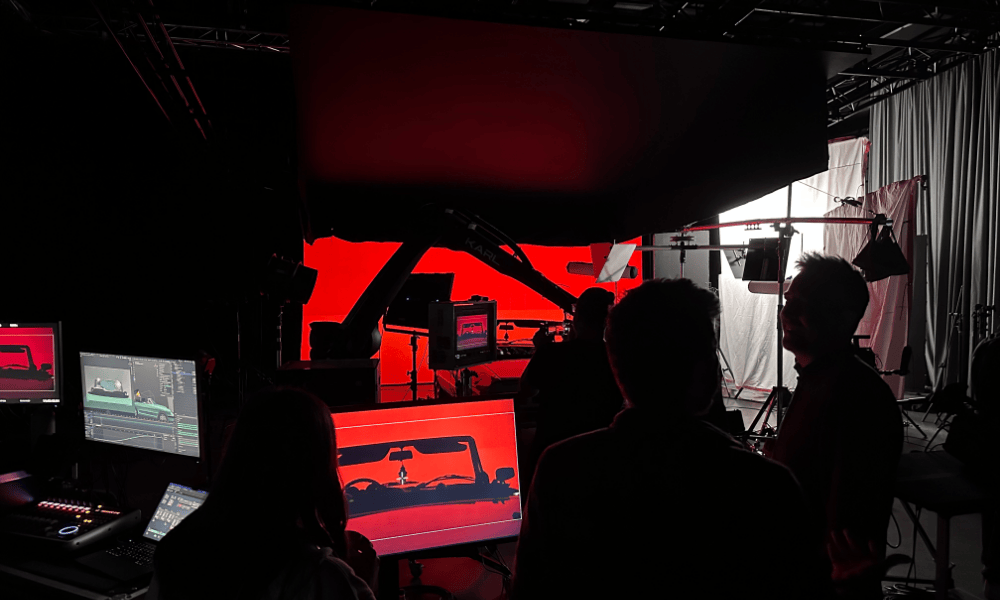
“We actually shot an alternate ending where the environments escalate into a sort of hellish landscape before the screen glitches and cuts to a bright red stage wall. The camera pulls back to reveal the studio and the characters realize they never left.” On the idea of revealing the irony behind the curtains of the short he says, “ It was visually interesting, but ultimately I preferred the idea that they succeed in their escape, even if it’s a slightly magical one. So we kept the red screen only for the credits.”
Escape is produced under McMahan's banner Rocket Surgery and he is represented by Tinygiant. The film is available to watch now on Vimeo.
Credits
Writer/Director/Editor: Trevor McMahan
Executive Producer: Patrick Morris, Jean-Paul Cardinaux, Fabrice Rabhi
Cast: Anna Bradley, Will Fihn Ramsay
Director of Photography: Julien Bourdeille
Additional Photography: Greg Pedat
Camera Department: Gabriel Engelberts, Arnaud Portalier
Lighting Department: Gabriel Braun, Axel Bove, Paco Buil
Virtual Production: Appia Agency
VP Supervisor: Patrick Morris
VP Operator: Irine Figueres
2D Street Backgrounds: drivingplates.com, Ian Sharples
Motion Control: Mocoloco Lab, Christophe Persoz, Jean-Paul Cardinaux
Kino Flo / Dedotec Schweiz: André Kurtz
Spin Light Rig: machinos.ch
Media Server: disguise
Studio Manager: Sylvie Petrinin
3D / Unreal Engine Team: Le Truc Studio, Fabrice Rabhi, Safran Juillard, Hugo Chenin, Thomas Hubert
Post-Production Producer: Joy Corthesy
Post-Production Team: Le Truc Studio, Cyril Muller, Romain Delaunay, Albin Merle, Romaric Vivier, Noé Marco Navarro
Title Design: Amalia Luyet-McMahan
Script Consultant: Blaine Kneece
Colorist: Rémy de Vlieger
Sound Team: Masé Studios
Sound Designer: Valentin Dupanloup
Re-Recording Mixer: Valentin Dupanloup
Coordinator: Ivan Ruet
Music: "Sleepwalker" performed by Arcade Fire & Owen Pallett; published by Arcade Fire Music LLC, Domino Publishing Company; courtesy of Milan Records, Sony Music Masterworks
Special Thanks: Visuals Switzerland (Camera/Lighting Partner), Studio Images, Carugati Automobiles — Tiziano Carugati, Marc Seynave
© MMXXVI Rocket Surgery