Luís Hindman and Sufiyaan Salam on their BAFTA-nominated short, ‘MAGID/ZAFAR’
17 Feb 2026 | Molly Lipson
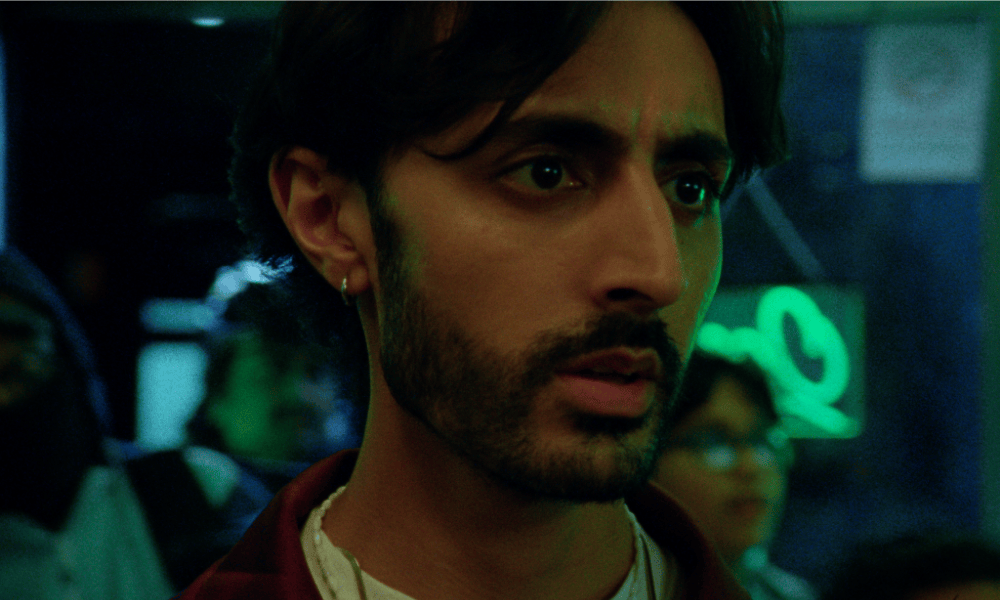
MAGID/ZAFAR unfolds over one night inside a British Pakistani takeaway, where two young men confront their fractured childhood friendship, and long-suppressed tensions erupt as one of them reveals he’s about to get married.
It opens as a fast-paced and action-filled drama, before moving into a much quieter, emotionally raw finale. Written by Luís Hindman and Sufiyaan Salam, and directed by Hindman, the film has screened at BFI London Film Festival and Clermont-Ferrand, with more festivals still to go.
Filmed in 2024, MAGID/ZAFAR was developed and financed through FUTURE TAKES, the joint initiative between the BFI and Film4. It won Best British Short at the BIFAs 2025 and is is nominated for Best British Short at this year’s BAFTAs, alongside Nostalgie, Terence, This Is Endometriosis and Welcome Home Freckles in a category that mixes live action and documentary. The BAFTAs take place on Sunday 22nd Feb.
Short Stuff recently discussed all the BAFTA-nominated films on the Cherry on Top podcast by our friends at Cherrypick.
Here, we speak to Hindman and Salam about how they met and started working together, the themes behind this brilliant short, and why shooting on 16mm film felt like the only possible option.
Short Stuff: Congrats on being shortlisted for a BAFTA! This is your debut short film – how did you both get into filmmaking and how did you get here?
Luís Hindman: I started making short films when I was a teenager and put them on YouTube, these overly self-serious dramas made by a bunch of fourteen-year-olds…Shout out to my brother, he was actually my first actor when I was making stuff as a kid. I then got into directing music videos, which we collaborated on – Sufiyaan is a self-taught animator as well – and that took us to narrative filmmaking, which is really what we always wanted to do.
Sufiyaan Salam: My background is pretty similar, I was also making stuff as a teenager, borrowing my dad’s two-megapixel phone and making videos with my cousins and sisters. I taught myself animation because I just couldn't wrangle enough friends to help me make the films I wanted to make!
LH: We actually met through YouTube. At the time it was a great place for young creatives to share work and I set up a group chat with a few people including Sufiyaan. I didn't go to film school or university, but that community was sort of my equivalent. It was a group to share scripts with, swap notes, and just being around other kids who liked filmmaking.
How are you feeling about being nominated for a BAFTA?
LH: Honestly, my first thought whenever something nice happens with festivals or awards is how happy I am for the whole crew. It makes me feel like they didn’t waste their time, like it’s been worth it. With shorts there's no promise of it getting seen even at festivals, and you put a lot of work into it, and you convince a lot of other people to put a lot of work and time into it too, without the promise of what's going to happen with it. So I'm very happy and relieved for the cast and crew.
How did you land on the story that comes up in MAGID/ZAFAR?
LH: I'd been working on music videos for a while and I'd crystallised a visual style and language that felt like me, but I hadn't applied that to a personal world yet. That’s what I wanted to do with this project. We had a few different ideas of what the story could be but what most excited us what the character of Magid. We borrowed him from another script Saf had written where he was more of a supporting character. He was mainly there to provide the energy and almost comic relief at points, which made him really magnetic and we were drawn to hinging a film around someone like that. The year prior to writing MAGID/ZAFAR I’d done a bunch of music videos for this one artist, Joseph, which were all about queer relationships and so eventually we sort of fused all these things together.
SS: Luís and I had a group chat where we would just share any snippet of a conversation we’d overheard, or an idea or an experience, anything we came across, that felt connected to the Magid character, what we called Magid-ish moments. We wanted to go beneath the surface – we’ve got this British Asian bad boy bravado, what's beneath that? And what's that an armour for? Then we thought, okay, if we transpose this character onto a location, where is it? The answer: a Pakistani takeaway. That gave us more to work with: you’re in front of customers, you've got to have that high energy, then there’s all this drama and anger and confusion going on in the kitchen, so you bring your temper to front of house, and all this is going on but you’re still not your true emotional self. And yeah, the character and story just completely came alive once we settled on all this.
The film also explores themes of masculinity. Can you go into a bit more detail about that?
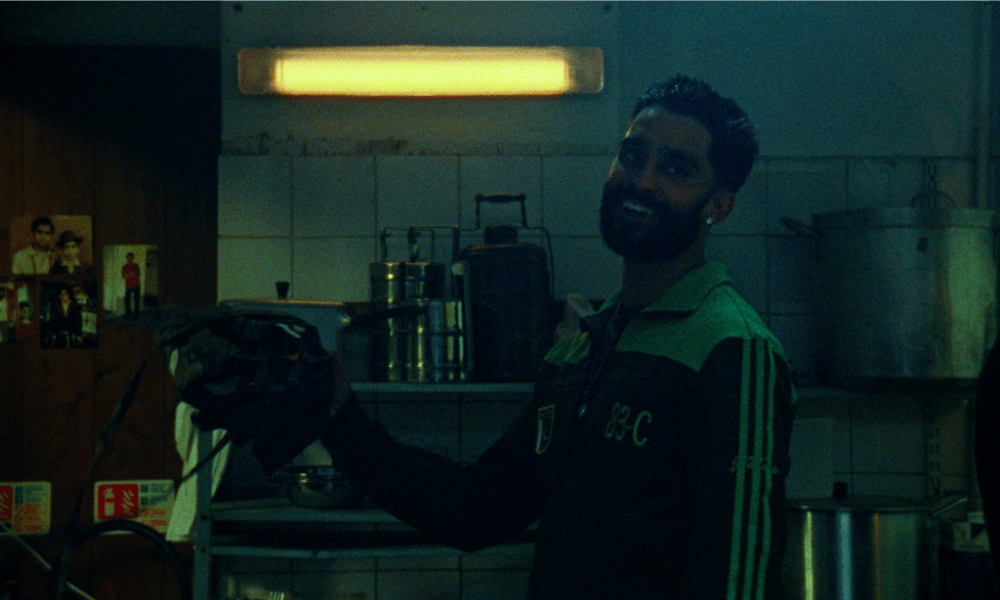
LH: Initially we wanted to play with the audience's expectations of what they think South Asian masculinity is like. Early on we talked a lot about performance and the shedding of facades. There are these three stages, the idea being that as you go deeper into the takeaway from the main area to the kitchen to the pantry, one layer gets removed from the character, from that facade.
SS: Also what the film doesn't do at any point is have any character give any of the men in the film a reason to hide themselves. There isn’t a conventional antagonist who makes Magid have to act a certain way. The actual experience of masculinity, at least in my experience, is this thing that you're almost self-censoring. There isn't a cultural reason Magid feels a certain way either. Just by living in Britain at a certain time and being a man, not knowing how you’re supposed to act in a given situation, and so on. That was the real tension we were trying to play with – people who don't know what they want, and they don't know why they're acting this way, but there's still something in them that wants to escape or to be pure.
LH: Also, it really became about presenting a mosaic of different types of British Asian masculinity. I won't elaborate too much on what each one maybe means, but it's there for the audience to look for. We wanted to show basically every age of a British Asian man, from the kids who run in at one point to the elders. It’s the whole past, past, present, future of what it means to be British Asian all existing in this one space.
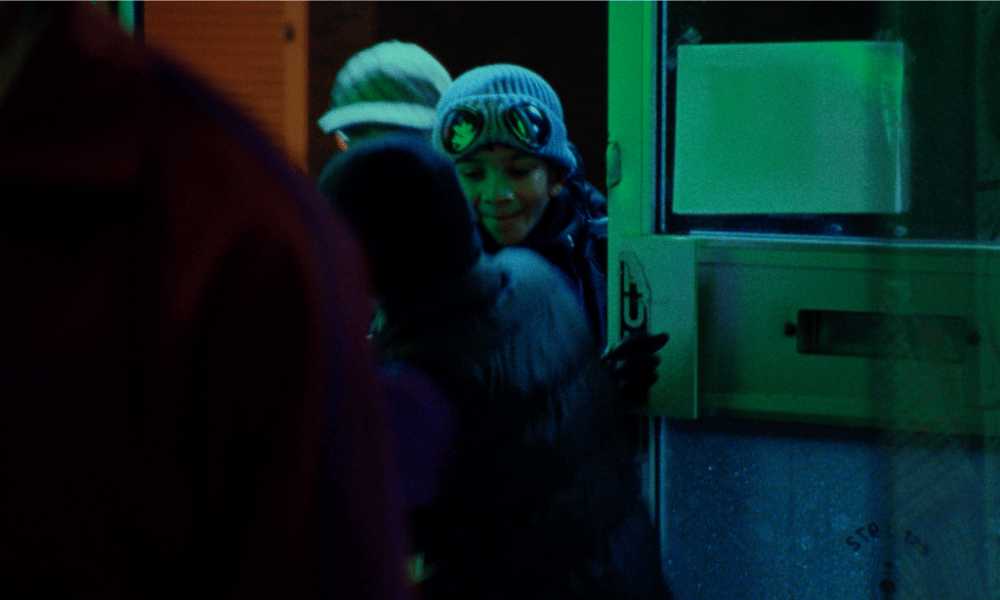
It’s very high energy, you notice off the bat the super-quick cuts that create that familiar kitchen/takeaway chaos. Was that baked into the script or did it come out mainly in the edit?
LH: The first half was always written to be energetic, and there’s a difference between that and where it ends up. That was in the script but it wasn’t overly didactic.
SS: Luís actually made a brilliant sizzle reel with the fast cuts and the music which helped us solidify it.
LH: Yeah I basically made the first two minutes of the film using footage from kitchen and cooking documentaries. I added text of the dialogue over the top and the same music that’s actually in the film and then we used that to sort of reverse engineer the shots during the shoot.
What was it like working with Eben Figueiredo and Gurjeet Singh, the two lead actors?
LH: It's been a very special experience with them. It's also basically my first time directing actors who are a similar age to me. That's a really different experience and a lovely one, you really are co-collaborators and you have the same touchstones, both in terms of references, but also life and culture.
SS: When we all got to see Khulvinder [Ghir] on set on the first day we were fanboying because we’ve all seen him on Goodness Gracious Me. It’s these little things you all get to share together that make it exciting.
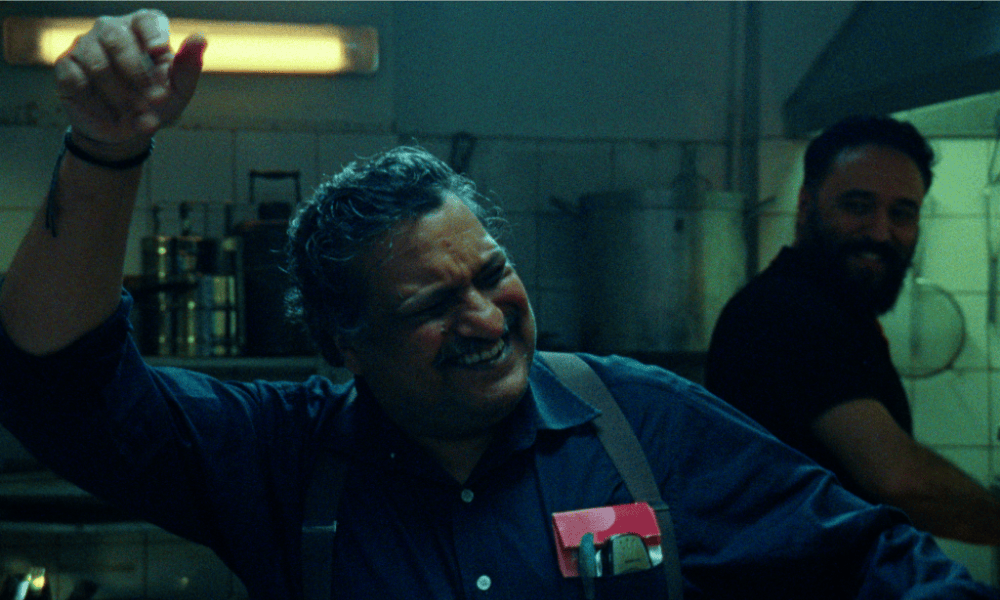
You shot this on film - why did you choose to do that and what was the experience like?
LH: For the last couple years before we wrote this short, I'd only been shooting on film, and I was just being a bit stubborn about it. Even when I shot on digital, I was always emulating film. So that was in my head when we were writing the script, and it felt specifically vital to this film because of what I was trying to do in terms of visually reacting against how British Asian settings are normally portrayed in cinema. It was really exciting to look at a British Pakistani takeaway through the eyes of Wong Kawai or Xavia Dolan. The question does come up of what justifies shooting on film? Sometimes subject matter can be part of that, but here we were asking ourselves, does a one-location film about two characters warrant being shot on 16mm? I felt it gave importance to the story from the off. It was the same with the costume design in a way, actually. On a really basic level, I wanted to make a British Asian movie which looked cool. Kawai and Dolan’s films are very emotionally raw and vulnerable, but also on the surface, they’re really beautiful.
SS: We really wanted to treat these characters in this location with the respect they deserve cinematically. The production design was amazing, but I do think to shoot that digitally would have lessened the experience of what it actually feels like inside one of these takeaways – it feels like a time capsule in a way.
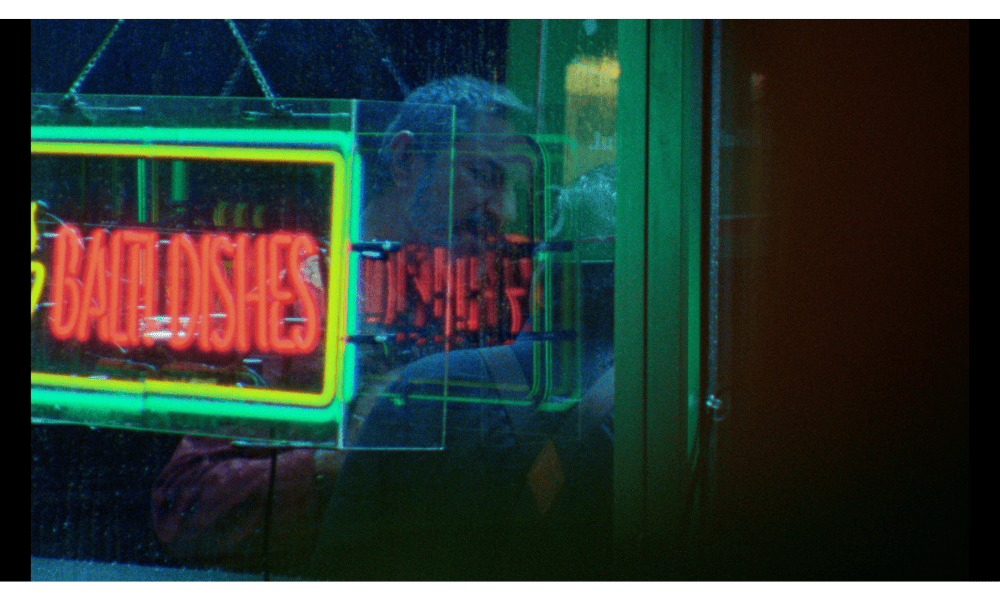
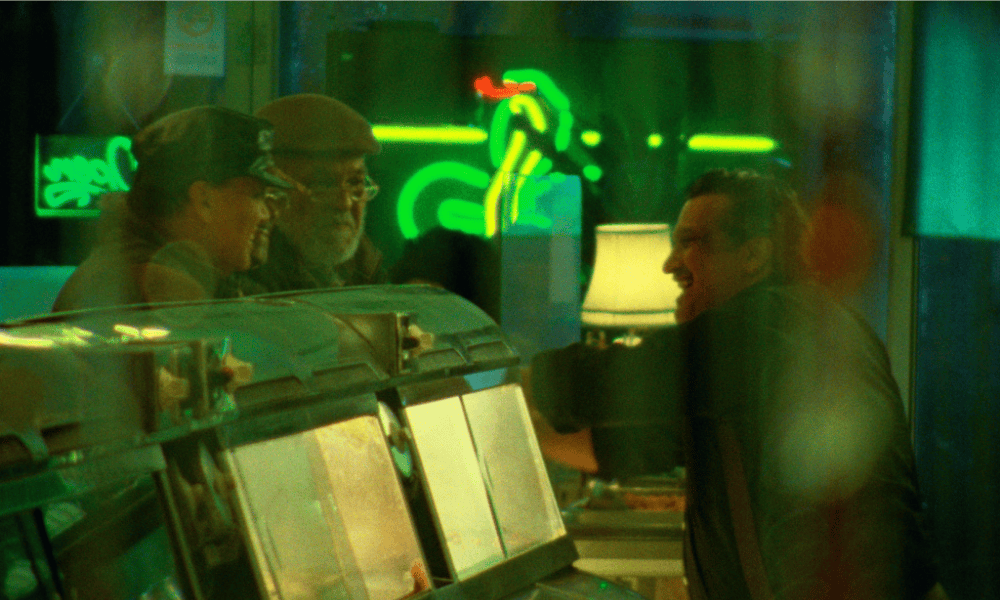
LH: Also on a visual level with the food, the smoke, the mixed colour temperatures, the neon signs – film loves that. It all came together to create the visual world I was after. One of the main reasons I shoot on film is just the process on set. Especially in this film, it gives a lot of power to the actors, because of the importance of each take, and they kind of run the set in that way. There's like a level of focus which just is a bit higher when you're shooting on film that I think specifically helps performances.