
From lost cities to family archives, MDAG Festival’s shorts search for ways to remain
8 July 2026 | By Berenika Balcer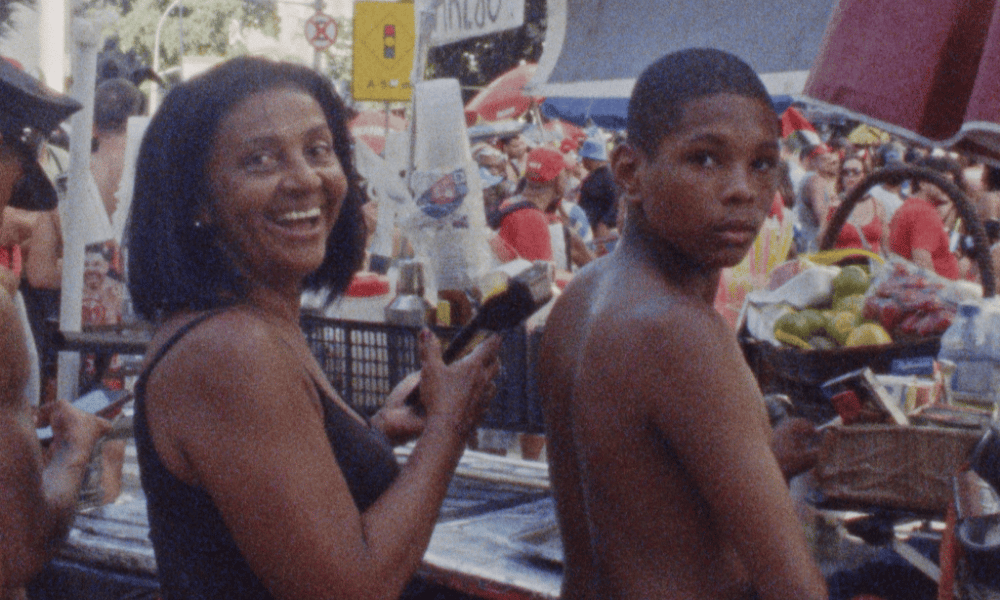
What does it mean to leave a trace behind? From lost cities and family archives to wartime relationships and reclaimed identities, these shorts from Millennium Docs Against Gravity (MDAG) search for ways to inhabit time and space.
In its twenty-third edition, Millennium Docs Against Gravity, the biggest Polish film festival dedicated to documentaries, blurred the lines between reality and art. Translating profound human journeys and ecological truths into visual poetry, weaving philosophy, grief and resilience into a breathtaking tapestry of human existence, MDAG allowed its audience to experience it all.
This year’s theme, ‘searching’, took many forms. While the programme explored documentary filmmaking's ongoing quest for new ways of telling true stories, several short films shared a more intimate concern: the search for a place in the world. Across stories of memory, war, family, identity, and political violence, they explored what it means to claim one's right to be.
In a conversation with the past
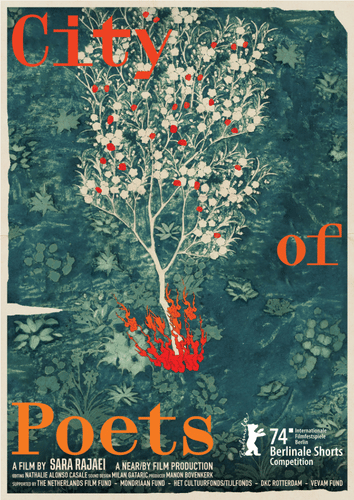
In City of Poets (2024), Sara Rajaei uses a rich collage of personal archive footage to create a memorial to a metaphorical Iranian city. Built for refinery workers and university employees, it was filled with streets named after poets. “The taxis, the buses, and the pedestrians made their way from one poet to another. The residents made up riddles and games for the tourists, reciting poetry instead of giving addresses,” the film’s narrator says. Through archival footage and poetic narration, Rajaei transforms the city into a landscape of memory and loss.
Once there were no more poets’ names, the new streets were named after trees and flowers. When the war broke out, they were renamed again, this time after fallen soldiers. “No one thought about poetry anymore,” says the narrator. Culture was first erased, then banned. Through its intimate, slow-paced atmosphere, the city becomes a symbol of profound loss in the face of political constraints. The melancholy is even stronger with transitions between describing the city in English and the more personal stories in Farsi. “We burnt all music, photos, and books,” concludes the narrator.
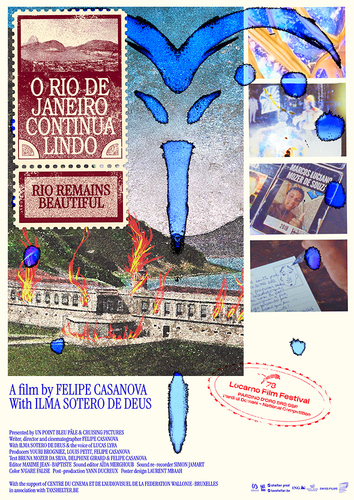
Also subtly tapping into the exploration of a presence that has disappeared, Felipe Casanova’s Rio Remains Beautiful (2025) takes us straight into the middle of the Rio Carnival, where the grainy but dynamic camera work emphasises that loss still lingers. The feverish atmosphere and communal joy are starkly contrasted with the voice-over n which we hear Ilma, a Carnival street vendor, addressing her son, Lucas, in a letter; he was killed by the police. Although a fictional character, Ilma is a culmination of Brazilian mothers who have lost children to police violence.
The festivities then become a multilayered story of a brutal reality. This is the Rio de Janeiro defined by both injustice and resistance from people reclaiming the streets, in this case, for Carnival. It’s a “postcard from Rio that travels through time,” as the director himself states. The hybrid approach, with a mix of contemporary footage captured on film and archival footage, intensifies this choir of broken voices. The film's emotional power lies in its refusal to separate love from loss. The mothers' grief, the city's celebrations, and the persistence of memory are all part of the same story.
Leave a message
The search for the absent through images and stories continues in the intimate and heartbreaking The Most Beautiful Man in the World (2026) by Paolo Baiguera. After his death, Paolo’s uncle Michele left behind 25 photographs, a family taboo, and a missing story. About 30 years later, these photos are used to explore the life of an man lost to HIV and heroin in 1990s Italy.
The supporting element to this intimate endeavour is the Google Vision API, used to interpret the images, constituting a rather interesting use of AI. The results are unsettling. Reduced to data points about class, education, and consumer behaviour, Michele's life becomes a reminder of how little algorithms can understand human experiences.
But as Paolo’s mother reorganises the photos in line with her memories and love, the story is revived to its incredibly touching and emotional core. Beneath the film lies a familiar impulse: the desire to understand ourselves through those we have lost – or perhaps never truly knew. Baiguera shows that what really matters is human value and genuine emotions, as Michele is brought back into the family.
Also striking the tones of intimacy and deep love, but turning towards the present, is Mon Dewulf’s Far From Beyrouth (2025). As his partner, Karim, goes through the chaos and uncertainty of war in Beirut, Mon finds himself caught between the safety of distance and a growing unease and worry. Videos, voice memos, and text messages are used to craft an intimate portrait of a relationship.
The juxtaposition of the “normality” of life in Belgium and heartbreaking updates of the daily life during war lies the heaviest in the silent moments. Dewulf doesn’t impose himself and his perspective onto the narrative, but rather his restraint allows his concern for Karim to emerge naturally, until the viewer begins to share his uncertainty and fear. The feeling of helplessness is there, but so is resistance. It’s a gutwrenching yet beautiful, intimate yet universal.
The echoes
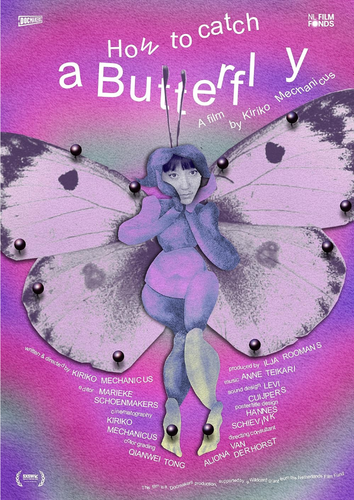
How to Catch a Butterfly (2026) takes, however, a completely different approach, while remaining raw and personal. In 2021, Robert Aaron Long killed six Asian women in massage parlors in Atlanta, supposedly as a way to suppress his “uncontrollable sexual desire.” Kiriko Mechanicus becomes somewhat obsessed with the case, so she writes letters to Long as a way to understand herself. “What do our racial fetishes tell us about our hidden human desires?” she asks in her essay exploring the intersection of race, sexuality, and violence in Western culture.
Challenging the objectification of Asian women, Mechanicus probes her own psyche and societal dynamics. It’s both touching and deeply unsettling. What begins as research into racial fetishisation gradually becomes an examination of identity itself, of the roles imposed upon Asian women and the ways these roles are internalised, resisted, and performed. “I can’t perform a Japanese woman anymore,” says Mechanicus’s mom, “I lost it.”
Just as deeply personal as Machanicus’s own creative identity is in her film, so too is the original style of Julia Mellen’s Abortion Party (2025). It’s the most chaotic documentary in the whole selection, as Mellen proves that there’s no such thing as oversharing. Blending a confessional stream-of-consciousness monologue with nostalgic, rough 3D animation, Abortion Party recounts Mellen’s decision to throw a party after terminating a pregnancy at age 20.
The serious topic is approached with an irreverent, absurdly humorous approach, making it feel like a TikTok video. With raunchy SketchUp visuals unfolding in the background, a Zoom-like rectangle containing Mellen's rambling monologue bounces around the screen like an old Windows XP logo. Packed with internet slang, name-dropping, and increasingly bizarre anecdotes, the film feels both unmistakably contemporary and strangely nostalgic. And then, beneath it all, there are also allusions to the gentrification of Chicago’s Pilsen district, where she used to live. Amid the chaos, humour, and relentless oversharing, Mellen creates a space entirely her own, turning self-exposure into an unapologetic assertion of presence.